

Building an Effective Middle‑Distance Swim Program: Mission Viejo Coach Jeff Julian’s Practical Guide
From Club Roots to Pro Performance: Crafting Success, Mastering Technique, Volume and Mindset
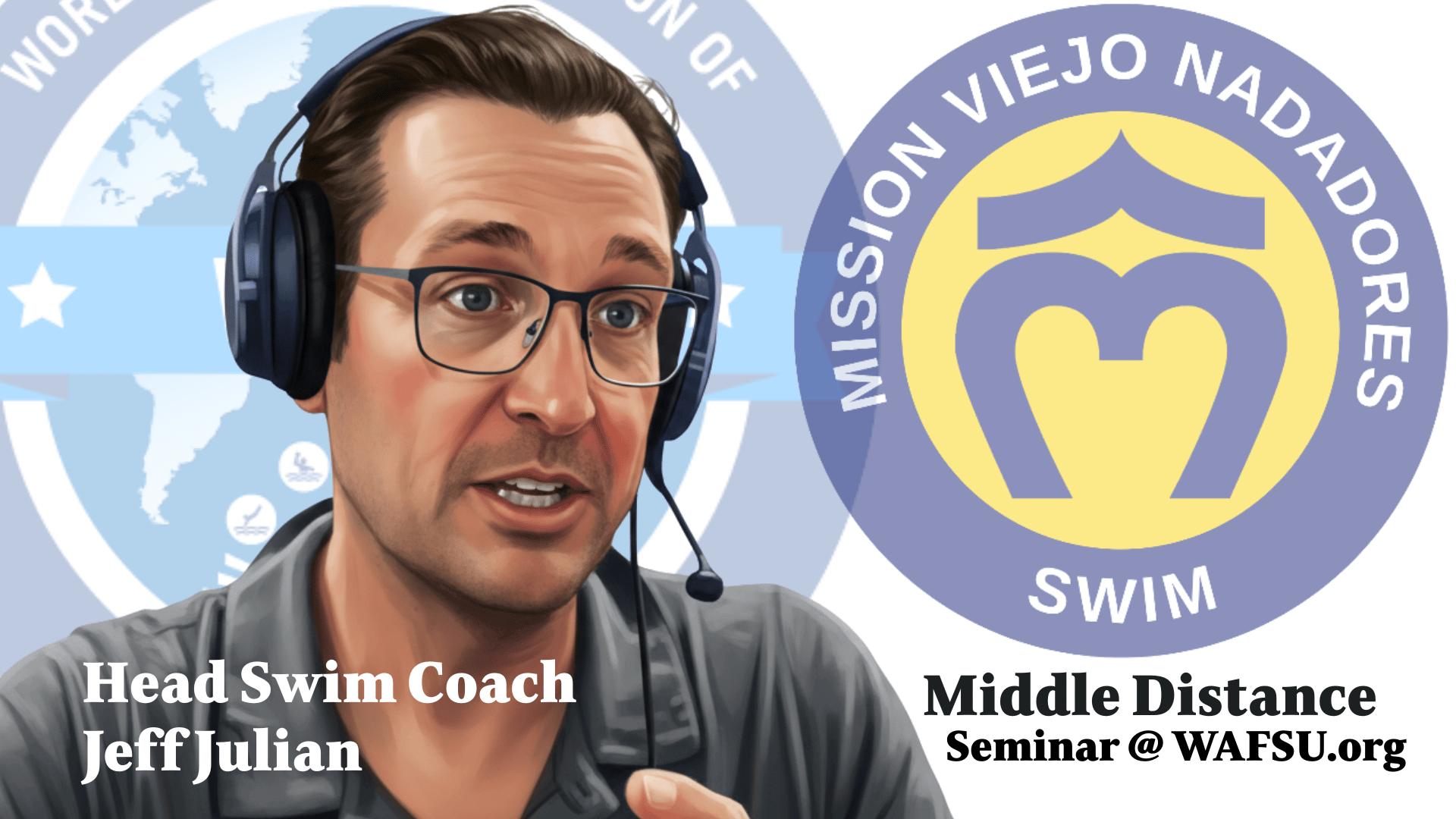
Coach Jeff Julian shares his practical approach to building an effective middle‑distance swimming program and the coaching philosophies that drive success at Mission Viejo. He also dives into staff structure, training tactics, and tech tools used to develop athletes.
Learn:
How to balance quality‑based work with volume for middle‑distance swimmers.
Key technical fundamentals (core, balance, stroke counts) that boost performance.
Strategies for developing athletes in club settings without relying on elite recruitment.
Insights into Mission Viejo’s coaching staff, leadership roles, and mentorship model.
Practical tools (e.g., Meta glasses) for efficient video feedback and athlete communication.
1. Introduction & Context
Welcome remarks (Dennis, Mark)
Jeff Julian’s role and background
Head coach & Performance‑Center creator at Mission Viejo (California)
Club‑coach perspective vs collegiate‑coach perspective
Purpose of the talk: “Effective Middle‑Distance Program”
2. Coaching Philosophy & Approach
Process‑Based Coaching
Emphasis on conversational ideas rather than rigid “set plans”
Building from basics, focusing on fundamentals first
Balancing Quality & Quantity
Quality‑driven mindset with sufficient workload
Avoiding “volume‑only” or “speed‑only” extremes
Detail‑Oriented Development
Importance of habits, technical details, and consistent feedback
Repetition of key cues for younger swimmers; evolving communication for older athletes
3. Technical Foundations of Middle‑Distance Swimming
Power & Stroke Mechanics
Stroke count → power creation → arm rate → speed
Connecting powerful strokes with tempo and efficiency
Core Stability & Balance
Core (stomach, back) as foundation in an unstable aquatic environment
Balance: breathing, arm movement, momentum utilization
Flexibility vs. Mobility
Definitions and relevance to shoulder function and streamline position
Identifying and addressing tight lats, limited shoulder range, etc.
4. Training Design & Periodization
Macro‑cycle Structure for Ages 13‑15
Typical mileage: ~6 k per practice, dropping to ~5 k in later phases
Progressive intensity, then taper with light aerobic work
Training Zones & Energy Systems
Aerobic (Gear 1‑3) – base, warm‑up, warm‑down efficiency
Threshold (middle‑distance) – sustainable fast pace
Anaerobic/Speed – sprint, race‑specific work
Sample Sets & Interval Strategies
450‑second pace intervals with short resets (250‑210 m)
Descending 50‑m repeats (55 → 50 → 45 → 40) to blend threshold & speed
Use of assault bike or land cardio to pre‑fatigue before swim sets
Volume vs. Quality Debate
When limited pool time forces high volume, embed technical focus
“Volume without detail” can erode technique during breaks
5. Mental / Psychological Component
Drive vs. Motivation
Motivation is fleeting; cultivate lasting drive in coach & athletes
Modeling passion, commitment, and love of the sport
Mind Training
Half of training should be mental toughness/decision‑making practice
Preparing athletes for race pressure, confidence, and resilience
Goal Setting & “Next‑Step” Planning
Short‑term vs. long‑term development lenses
Mapping progression pathways for each swimmer
6. Coaching Structure & Staff at Mission Viejo
Leadership Team
Head coach (Jeff) + Head senior coach + Head age‑group coach
Operations/strategic lead (Sarah Dawson)
Strength & activation specialist
Coaching Staff Composition
~16 staff members (≈10 full‑time, 6 part‑time)
Pathways for staff development and promotion
Family & Athlete Integration
Jeff’s wife (Christine Quantz) – former gold‑medalist, career coach, senior‑side support
Pro‑group athletes assisting with age‑group coaching, meet duties, and clinics
7. Program Implementation Strategies
Addressing Limited Pool Resources
Alternatives: land cardio (spin bike), hill runs, beach runs, assault bike
Using “free‑form” learning: allowing athletes to experiment and refine technique
Technical Work on Hard Sets
Embedding cues (high elbow, breath pattern, stroke count) even during speed sets
Monitoring “break points” (stroke breakdown, breathing lapses) in real‑time
Use of Technology
Meta Ray‑Ban glasses for quick video capture & instant athlete feedback
8. Athlete Development Pathways
Club → College Transition
Preparing athletes for any collegiate environment (volume‑heavy or quality‑heavy)
Emphasizing work ethic, commitment, and adaptability
Mentorship & Role Modeling
Pro swimmers coaching age‑group groups weekly/monthly
Interaction with younger swimmers at meets, clinics, and everyday practice
Culture Building
Consistency in expectations, reinforcement of details, and fostering a “coach‑able” attitude
Time‑based culture development vs. immediate environment control
9. Competition & Racing Plans
Upcoming Racing Phases
Transition from aerobic/capacity phase to racing season (pro series, World Cup‑type meets)
Example: Mari Nostrum three‑meet series (May) to simulate consecutive race days
Race‑Specific Preparation
Emphasis on maintaining technical quality under fatigue
Building “tank” (capacity) ahead of high‑pressure meets
10. Reflections on Past Experiences & Lessons Learned
Rose Bowl Aquatic Tenure
Growth from 175th to ~25th nationally, record‑breaking performances
Challenges: facility limits, leadership changes, cultural mismatches
Personal Health & Resilience
Overcoming two late‑term cancer diagnoses, reinforcing purpose in coaching
Networking & Career Development
Importance of contacts (Dean Boxall, Jason Lezak, ISL involvement)
Leveraging relationships for international training opportunities
11. Frequently Asked Q&A Highlights
Interaction Frequency Between Pro & Age‑Group Swimmers
Regular mentoring, fee‑offset coaching, meet assistance, clinics
Typical Macro‑Cycle Mileage for 13‑15 Age Group
~6 k/week early phase, dropping to ~5 k with increased intensity
Sample Threshold Set on 200 m
450‑second pace intervals, descending 50 m repeats, focus on stroke count & breath pattern
Flexibility/Mobility Issues & Solutions
Identifying tight lats/shoulder restrictions, targeted mobility work, streamline drills
Technology Adoption (Meta Glasses)
Quick capture, instant sharing, enhanced feedback loop
12. Closing Remarks & Resources
Invitation to explore more WAFSU presentations & archives
Promotion of “Heavy or Not – The OG Swim Guide” podcast & “Making Waves” podcast by Summer Fink
Thanks, health wishes, and call for future participation
